
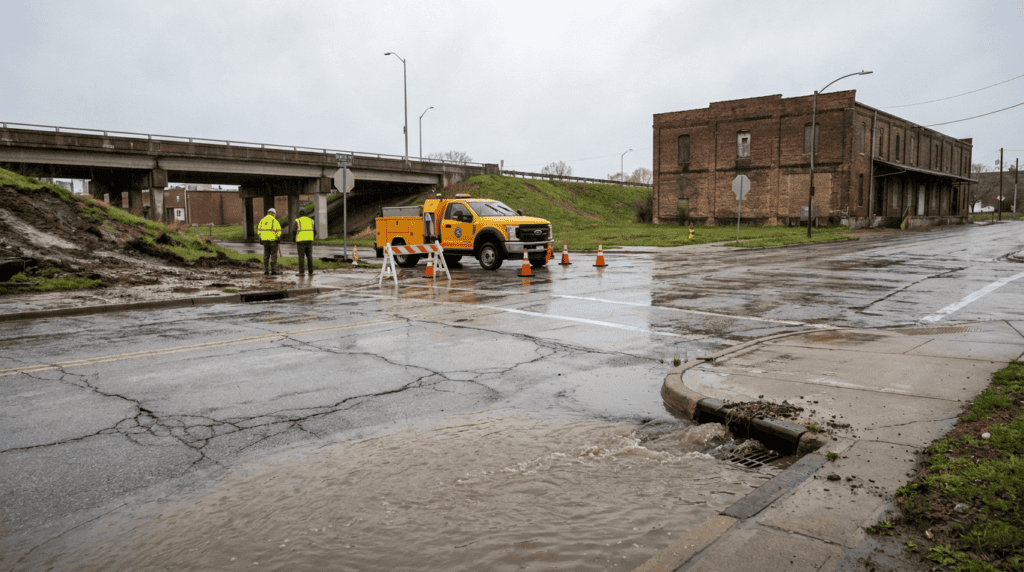
Public system failures often become visible too late because institutions are usually better at managing outward appearance than communicating early uncertainty. By the time the public hears about a breakdown, there has often already been a period of internal discussion, partial awareness, or procedural delay. That does not mean every delay is malicious. It does mean the public usually sees the problem after the system has already had time to define it, narrow it, or react to it internally.
This pattern appears across different types of public systems. Infrastructure failures, oversight breakdowns, water quality concerns, public notices, delayed enforcement, and service disruptions often follow the same general arc. First there are signs. Then there is internal recognition. Then there is some period of uncertainty, hesitation, or process. Only later does the public receive a version of the story, often after officials have already decided how to frame it.
The Government Accountability Office has long reflected the basic truth behind this pattern: public systems need independent scrutiny because internal processes alone do not always surface problems in a timely or transparent way.
Why delay is built into many institutions
Large systems rarely move with urgency unless pressure makes them. That is partly structural. Agencies gather information slowly, route concerns through multiple levels, consult legal teams, weigh communications risk, and rely on procedures designed more for controlled process than rapid clarity. Those features can make an institution look orderly, but they also increase the chance that a serious problem will be fully visible to the public only after key time has already been lost.
In some cases, delay comes from uncertainty. In others, it comes from instinctive risk management. Either way, the public often receives a later version of events than the institution did.
The public usually sees the cleaned-up version first
When public notice finally arrives, it often carries the tone of a resolved explanation rather than an unfolding problem. The system may present the issue as contained, manageable, or already being addressed. Sometimes that is fair. Sometimes it reflects the fact that institutions spend the early stage of a problem deciding not just what happened, but how it should be described.
That gap between discovery and disclosure is where trust problems often begin. People sense that the institution knew more, earlier, than it let on.
Why investigative and accountability reporting matter here
Reporting becomes especially important when the public version of a failure arrives late, stripped of context, or detached from earlier warning signs. Journalists can reconstruct the timeline, examine records, and ask whether a problem became visible only when it was no longer possible to keep it quiet. That work helps restore sequence, which is often what institutions flatten when they present the final version of events.
Without that reconstruction, the public is left mainly with the official summary. With it, readers can see whether the system responded promptly or merely appeared prompt once disclosure became unavoidable.
| Stage | What often happens |
|---|---|
| Early signal | A complaint, warning, anomaly, or internal concern appears |
| Internal awareness | Officials discuss, verify, or narrow the issue privately |
| Delay / process phase | Review, consultation, and framing take time |
| Public disclosure | The issue is presented once the institution is ready to explain it |
| Aftermath | Questions arise about what was known earlier |
Why this matters beyond one incident
Late visibility does not just frustrate the public in one case. It changes how people understand institutions more broadly. If the public repeatedly learns about problems only after internal handling has already been underway, trust weakens. People begin assuming that transparency is reactive rather than proactive. In many cases, that assumption is not entirely irrational.
That is why this is not only a communications issue. It is a structural accountability issue. The later the public learns, the harder it is to evaluate the decisions made in the earlier phase.
Final thoughts
Public system failures often become visible too late because the machinery of institutions favors internal management before public clarity. That may be understandable in some situations, but it also creates a recurring trust problem. The public deserves more than a polished summary after the fact. Good reporting helps recover the missing sequence, which is often where the real accountability questions begin.

Leave a Reply