
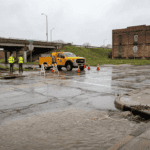
Public system failures often become visible too late because institutions are usually better at managing outward appearance than communicating early uncertainty. By the time the public hears about a breakdown, there has often already been a period of internal discussion, partial awareness, or procedural delay. That does not mean every delay is malicious. It does mean the public … [Read more...] about Why Public System Failures Often Become Visible Too Late
What the EPA Lead Rule Means in Practice for Utilities and Households

The EPA’s lead rule matters in practice because it affects not just utility compliance, but how quickly households are informed, how infrastructure gets prioritized, and how public trust is earned or lost. For most readers, the key point is simple: lead rules are not just technical requirements buried in utility paperwork. They shape what gets tested, what gets replaced, what … [Read more...] about What the EPA Lead Rule Means in Practice for Utilities and Households
How Investigative Reporting Turns Fragments Into a Public Record

Investigative reporting often begins with fragments: a complaint, a tip, a rumor, an unexplained delay, a missing document, or a line in a report that does not seem to fit the official story. The work of the investigation is to turn those fragments into something the public can actually evaluate. That means gathering records, building timelines, testing claims, and showing how … [Read more...] about How Investigative Reporting Turns Fragments Into a Public Record
What a Strong Public-Interest Investigation Actually Requires

A strong public-interest investigation requires more than a compelling allegation. It needs documentation, timeline discipline, source care, and enough reporting depth to distinguish pattern from noise. The best investigations do not just expose that something went wrong. They show how it went wrong, who knew, what evidence supports the conclusion, and why the issue matters … [Read more...] about What a Strong Public-Interest Investigation Actually Requires
How Oversight Breaks Down Even When the Rules Look Strong on Paper

Oversight often breaks down not because no rules exist, but because rules alone do not guarantee follow-through. A board can exist, a policy can be written, a reporting system can be in place, and an agency can still fail in practice. That happens when accountability becomes too procedural, too slow, too fragmented, or too easy for institutions to manage without truly changing … [Read more...] about How Oversight Breaks Down Even When the Rules Look Strong on Paper